Local SEO Guide 2026: Rank in Google Maps
A step-by-step local SEO guide for 2026: rank in Google Maps and the Local Pack with GBP optimization, NAP, citations, reviews, and schema.
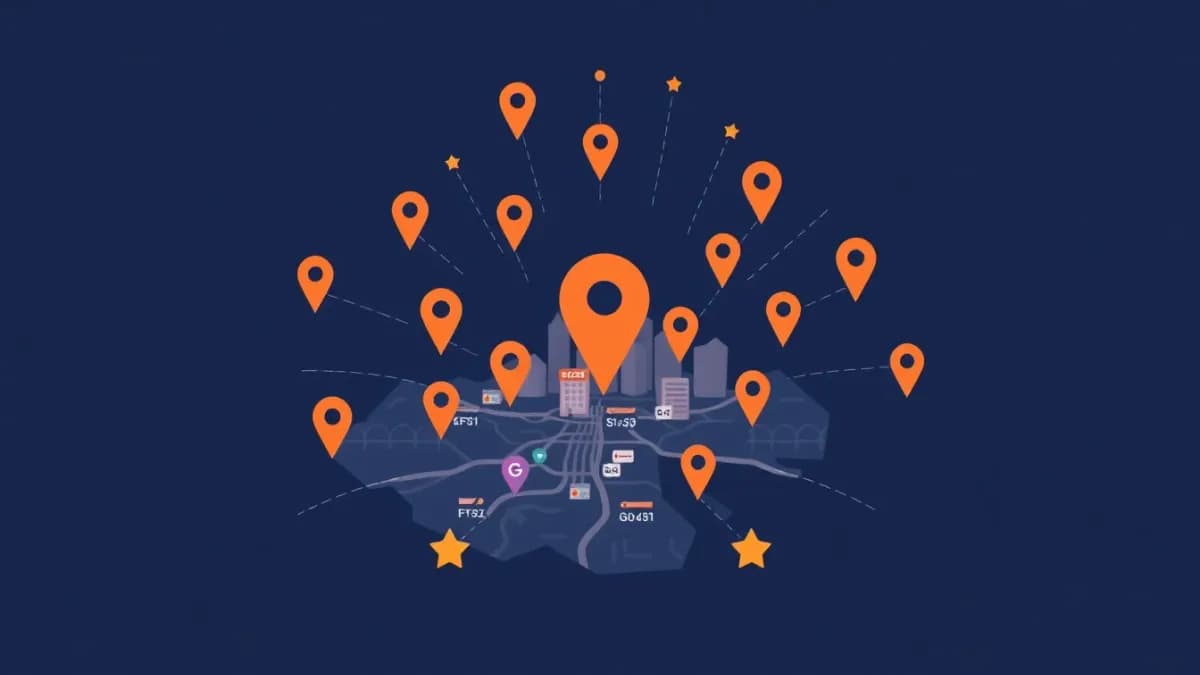
Local SEO is the practice of optimizing your business so it ranks in location-based searches — the "near me" queries and the Google Local Pack, the map with three business listings that sits at the top of local results. If someone searches "dentist near me" or "plumber in Lahore," Google runs a different ranking system than standard organic search, weighting your Google Business Profile, proximity, reviews, and NAP consistency. This guide walks the exact, ordered steps to rank in Google Maps and the Local Pack in 2026.
If you run a restaurant, clinic, law firm, salon, repair shop, or any business serving a defined geographic area, local search is your most direct customer-acquisition channel. The good news: most of your competitors execute it badly or not at all. Do the fundamentals consistently and you win the map.
What Is Local SEO?
Local SEO optimizes your online presence to capture business from searches that have geographic intent. It overlaps with traditional SEO but runs on its own ranking signals — Google weighs relevance, distance, and prominence to decide who shows in the Local Pack and on Maps.
The most valuable outcome is the Local Pack itself: three business listings with a map, shown above the standard blue links for location queries. Below the pack, Google Maps returns a longer ranked list. Winning either means optimizing the same core levers:
- Google Business Profile — the single biggest factor, powering your Maps listing and knowledge panel
- NAP consistency — your Name, Address, Phone matching everywhere online
- Reviews — volume, average rating, recency, and your response rate
- Local citations — mentions of your NAP across directories
- On-page local signals — city-targeted pages, embedded maps,
LocalBusinessschema - Local backlinks — links from community sites, sponsors, and local press
Local SEO is a distinct discipline. A page that ranks #1 organically can be invisible in the Local Pack if the Business Profile and proximity signals are weak.
Why Local SEO Matters in 2026
A large share of all Google searches carry local intent, and "near me" queries have climbed steadily for years. People who search locally tend to act fast — visiting, calling, or buying often within the same day. Google Maps is among the most-used apps in the world. That combination makes the Local Pack the highest-converting real estate in search.
Several 2026 shifts raise the stakes:
- AI Overviews now appear for local queries, pulling from Business Profiles and review content. Strong structured data and a complete profile make you citation-ready for AI answers — the same principles covered in AI Overviews and SEO.
- Voice assistants (Google Assistant, Siri) lean heavily on locally optimized listings to answer "find me a..." requests.
- AI answer engines weigh your structured data and review signals more than ever. If you want to be the cited local source, see AEO vs SEO.
If your business serves a specific area, this is not optional. It is the primary way local customers find you instead of your competitor.
1. Set Up and Optimize Google Business Profile
Your Google Business Profile (GBP) is the foundation. It powers your Maps listing, your Local Pack appearance, and the knowledge panel shown when people search your brand name. A half-filled profile is the most common reason a good business loses to a worse one.
Complete every single field:
- Business name — your exact, real name. No keyword stuffing.
- Primary and secondary categories — be specific. "Pakistani Restaurant," not just "Restaurant." Your primary category strongly shapes which searches you appear for.
- Address — must match your website and every directory, character for character.
- Phone number — a local number, not toll-free.
- Website URL, business hours (including holiday hours), and a description (use your full character allowance and mention your city and services naturally).
- Service area — if you serve customers at their location rather than yours.
Add photos and videos. Profiles with rich, current imagery consistently drive more calls and direction requests than sparse ones. Upload your storefront, interior, team, products, and before/after shots, and keep adding fresh photos — recency is a signal.
Enable every applicable attribute — wheelchair accessible, free Wi-Fi, outdoor seating, women-owned, and so on. These become filters in Maps and help you match specific queries. For the full walkthrough, see the Google Business Profile setup and SEO guide.
2. Nail NAP Consistency
NAP stands for Name, Address, Phone number — and these three data points must be identical everywhere your business appears: your website, GBP, Facebook, Yelp, industry directories, and any other listing.
Small inconsistencies do real damage. "Street" vs "St.", "Suite 201" vs "#201", or a stale phone number on one directory creates ambiguity. Google's local algorithm can't confidently verify your business, so it trusts you less and ranks you lower.
Audit your listings before doing anything else — NAP issues quietly undermine every other tactic in this guide:
| NAP element | Get right | Common mistake |
|---|---|---|
| Name | Exact legal/brand name | Adding keywords like "Best Plumber" |
| Address | One format, suite included | "St." here, "Street" there |
| Phone | One local number everywhere | Tracking numbers that vary by listing |
Pick a single canonical format, write it down, and enforce it on every new citation. Run a free SlapMyWeb audit to see which of these on-page and consistency issues your site actually has.
3. Local Keyword Research and On-Page Optimization
Local keywords follow a clear pattern: [service] + [location]. "Emergency plumber Islamabad," "hair salon Defence Lahore," "corporate lawyer Karachi." Research the realistic variations and map each to a specific page — don't try to rank one page for every city.
Sharpen the research with the broader fundamentals in the complete keyword research guide, and match each query to the right page using search intent — local searches are almost always transactional or "near me" navigational, so your page should make calling, booking, or directions effortless.
On-page optimization for local:
- Put the city or area name in the title tag, H1, and meta description — see how to write title tags that get clicks.
- Build a dedicated landing page for each genuine service area you cover.
- Add your full NAP in the footer of every page.
- Embed a Google Map on your contact page.
- Reference local landmarks, neighborhoods, and community context in your copy.
Don't keyword-stuff the location into every sentence. Write naturally and let geographic relevance come through your content, schema, and business data. Structure pages with a clean heading hierarchy — the rules in heading tags for SEO apply directly to local landing pages.
4. Implement LocalBusiness Schema Markup
Structured data tells Google explicitly that you are a local business, where you are, and what you offer. It's one of the highest-impact technical changes here because it feeds Google's understanding of your business entity directly rather than leaving it to guess from page text.
Per schema.org, use the most specific type that fits — Restaurant, Dentist, Plumber, LegalService, etc. — all of which extend LocalBusiness. Here's a complete, valid example:
{
  "@context": "https://schema.org",
  "@type": "Restaurant",
  "name": "Karachi Biryani House",
  "image": "https://example.com/photos/storefront.jpg",
  "url": "https://example.com",
  "telephone": "+92-21-1234567",
  "priceRange": "$$",
  "address": {
    "@type": "PostalAddress",
    "streetAddress": "123 Burns Garden, Block 5",
    "addressLocality": "Clifton, Karachi",
    "addressRegion": "Sindh",
    "postalCode": "75600",
    "addressCountry": "PK"
  },
  "geo": {
    "@type": "GeoCoordinates",
    "latitude": 24.8138,
    "longitude": 67.0301
  },
  "openingHoursSpecification": [
    {
      "@type": "OpeningHoursSpecification",
      "dayOfWeek": ["Monday", "Tuesday", "Wednesday", "Thursday", "Friday", "Saturday", "Sunday"],
      "opens": "11:00",
      "closes": "23:00"
    }
  ],
  "aggregateRating": {
    "@type": "AggregateRating",
    "ratingValue": "4.6",
    "reviewCount": "342"
  },
  "servesCuisine": ["Pakistani", "Biryani", "BBQ"],
  "acceptsReservations": true
}
Place this JSON-LD in the <head> of your homepage and location pages. The address and telephone values must match your GBP and citations exactly — schema is part of your NAP. Only include aggregateRating if those reviews are genuinely shown on the page. Validate every change with Google's Rich Results Test before going live.
New to structured data? Start with schema markup for beginners, then layer in FAQ schema on your service pages for extra SERP real estate.
5. Build Local Citations
Citations are mentions of your business NAP on other websites — directories, social platforms, industry listings, and local associations. They're a core local ranking signal because they corroborate that your business is real, established, and located where you say it is.
Priority citation sources:
- Google Business Profile (done in Step 1)
- Facebook Business Page
- Yelp
- Apple Maps (Apple Business Connect)
- Bing Places
- Industry-specific directories (TripAdvisor for restaurants, Healthgrades for doctors)
- Local chamber of commerce
- Local newspaper and community websites
Favor quality over quantity. A handful of accurate citations on authoritative sites outweigh hundreds on spam directories. Build them gradually — a steady trickle each week looks natural and won't trip spam filters. Above all, keep every new citation NAP-identical.
6. Review Management Strategy
Reviews are among the most influential local ranking signals after Business Profile completeness. Quantity, average rating, recency, and your response rate all factor into whether you surface in the Local Pack — and they're the first thing a human checks before calling.
Getting reviews:
- Ask every satisfied customer directly — in person, by email, or via SMS follow-up.
- Make it frictionless — send a direct link to your Google review page.
- Train staff to ask at the point of sale or service completion.
- Never buy fake reviews. Google detects review fraud and penalizes it hard, up to suspension.
Responding to reviews:
- Respond to every review, positive and negative, promptly (aim for 24–48 hours).
- Thank positive reviewers specifically — name what they liked.
- Address negatives calmly and professionally; offer to resolve offline.
- Use responses to naturally mention your services and location.
You don't need a perfect score. A healthy, growing body of recent reviews with a strong average and visible owner responses beats a small pile of stale five-stars. Consistency and recency win.
7. Local Content Strategy
Location-specific content tells Google you're a genuine local business, not a national site bolting a city name onto a template. It also gives you pages to rank for the long tail of local queries.
Content ideas that work for local:
- City-specific service pages ("Emergency Plumbing Services in Lahore")
- Neighborhood guides tied to your industry
- Local event coverage and sponsorships
- Case studies featuring local clients (with permission)
- "Best of" lists for your area
- Local commentary that demonstrates real expertise
Give each city or service area its own page with genuinely unique content — not the same paragraph with the city swapped. Google recognizes and demotes doorway pages, and per Google Search Central, thin location clones can hurt your whole site. To do local content at scale without falling into the doorway trap, pair this with the framework in SEO content strategy and topical authority.
8. Local Link Building
Backlinks from local businesses, organizations, and media carry real weight in local rankings — they signal that you're an embedded part of the community, not a drop-in.
Local link-building tactics:
- Sponsor local events, sports teams, or charities — they typically link to sponsors.
- Guest post on local blogs and news sites.
- Join your chamber of commerce or local business association.
- Partner with complementary local businesses for cross-promotion.
- Get featured in local "best of" roundups.
- Contribute expert quotes to local journalists and reporters.
These tactics slot into a broader off-page plan — see link building strategies that actually work in 2026 for outreach that earns links instead of buying them.
For Agencies: Scaling Local SEO for Multiple Clients
Managing local SEO for many clients multiplies every step above — which is exactly where tooling and a repeatable process pay off.
A practical agency workflow:
- Run bulk audits across all client sites to set baselines.
- Surface common issues — missing schema, NAP inconsistencies, thin location pages, low review velocity.
- Prioritize clients by opportunity size (high-demand areas first).
- Generate white-label reports showing current status and clear next steps.
- Re-scan monthly to track progress and prove value.
Agencies that systematize delivery — instead of doing local SEO ad hoc per client — tend to retain clients longer because results are consistent and measurable. Underpin the whole program with a clean technical SEO foundation so the local layer isn't built on crawl and indexation problems.
Common Local SEO Mistakes
Avoid the traps that quietly kill local rankings:
- Keyword-stuffing your business name. Adding "Best Plumber Lahore" when your real name is "Ahmed Plumbing Services" violates Google's guidelines and risks suspension.
- Ignoring negative reviews. Unanswered negatives tell both Google and customers you don't care. Each one is a chance to show professionalism.
- Duplicate GBP listings. Multiple profiles for one location confuse Google and dilute authority. Merge or remove duplicates.
- No local schema. Without structured data, you leave Google to infer your details from unstructured text. Make it explicit.
- Generic service-area pages. Copy-paste pages with only the city name changed are doorway pages — Google penalizes them. Make each one genuinely unique.
Frequently Asked Questions
How long does local SEO take to show results?
Most businesses see early movement in Maps and Local Pack visibility within roughly four to eight weeks of completing Business Profile optimization and fixing citations. Competitive industries in major cities can take several months for meaningful ranking change. Review accumulation is the longest game, so plan for ongoing effort rather than a one-time push.
Do I need a physical address for local SEO?
You need a real, verifiable address to create a Google Business Profile, but service-area businesses like plumbers and electricians can hide the address and display only the area they cover. You cannot use a P.O. box or a virtual office — Google verifies addresses and suspends listings it believes are fake.
How important are Google reviews for local rankings?
Very. Reviews are among the strongest local ranking signals after Business Profile completeness, and they're decisive for human trust. Volume, average rating, recency, and your response rate all matter — a steadily growing set of recent, well-rated reviews with owner replies usually outperforms a small batch of older perfect scores.
Can I do local SEO without a website?
You can rank in Google Maps with just a Business Profile, but a website meaningfully improves your local rankings. It supplies signals a standalone listing can't — local content, LocalBusiness schema, and backlinks. Even a simple, well-optimized five-page site makes a real difference.
What's the difference between local SEO and regular SEO?
Local SEO targets searches with geographic intent and is judged largely on relevance, distance, and prominence — your Business Profile, proximity to the searcher, and reviews. Regular organic SEO ranks pages on content quality, links, and technical health without a proximity factor. Most local businesses need both: organic SEO to win informational queries and local SEO to win the Map.
Start Ranking Locally Today
The businesses winning local search aren't doing anything magical — they complete the Business Profile, keep NAP identical everywhere, earn real reviews, ship unique local pages, and mark it all up with schema. Do those consistently while competitors ignore them and you take the Pack.
Want to know which of these signals your site is missing right now? Run a free SlapMyWeb audit and get a prioritized action plan — with the fix code — across local SEO, schema, mobile, and 240+ other ranking factors. Your customers are already searching; make sure they find you, not your competitor.
SlapMyWeb Team
We build SlapMyWeb — a brutally honest AI website audit that scans 240+ SEO, performance and Core Web Vitals signals and hands you the fix code.